|
Head Lice Treatment: Safer AlternativesTypical head lice treatment involves using a head lice shampoo containing pesticides that are stronger than those found in commercial bug killers. This is followed by combing out the nits with a special nit comb. 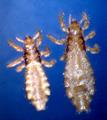
The blood veins under a child's scalp are very close to the surface of the skin and the scalp is extremely permeable to anything placed on it, absorbing up to 80%. This creates a health hazard for your child. These pesticides also emit toxic fumes. Manufacturer instructions warn to ventilate the room properly, but obviously, neither your child (or you) will really be able to avoid inhaling these toxic fumes even if the room is ventilated? There must be a better way for treating head lice, than to expose your child to toxic chemical pesticides! There is. Scroll down to find out!
What Are Head Lice?
Head lice can affect anyone, but generally affects young children, especially girls with longer hair. It does not matter if you are rich or poor, nor is it affected by how clean you are. Lice are simply transferred from one human host to another. The louse is small wingless insect which generally attaches itself to the shaft of a human hair, and feeds off human blood through the scalp. Related species of lice can also live on clothing items, while pubic lice generally live on hair in the pubic region. They are different from fleas (which mostly infect pets) in that they spend their entire life on their host.
|
- Start by checking for white, translucent eggs the size of a pin point. They will be tightly "glued" to the side of the hair shaft and you won't be able to flick them away with your fingers.
- Next Look for adults, which are six-legged, wingless insects. They are 2 to 4mm long with translucent, grey-white bodies.
- Then look for insects that are reddish-brown if you don't see any that are grey-white. The head louse can change color after feeding, when they are engorged with blood.
- Check bedding for louse droppings (will look like dirt on the pillow).
Preventing Head Lice
Transfer usually comes through direct head-to-head contact with an infested person, but can also be spread by sharing combs, stocking caps, scarves, towels or bedding.
Children are often the most affected, particularly those between the ages of 3 and 10. Additionally, females often get head lice more than males, possibly due to having longer hair. Pets are generally not carriers.
To prevent transfer of lice from affected individuals you need to:
- Treat the affect individual(s) by removing all nits and live lice.
- Launder all clothing including coats, head gear, bedding and towels.
- Vacuum furniture and carpets (make sure to throw away the vacuum bags when finished).
- Place all stuffed animals in garbage bags as a preventative.
Life Cycle of Head Lice
Here are the four cycles of the head louse.
- Lice Eggs (Nits): They are firmly attached to the hair shaft, and can easily be mistaken for dandruff. They are oval shaped and usually yellow to white.
- Nymphs: After about a week, a nit will hatch into nymphs which are young head lice. At this stage they begin feeding on blood from the scalp.
- Adults: After 7 days, a nymph matures into the adult stage, It will be about the size of a sesame seed with a white-grey color. Adults will live about 30 days.
Home Remedies for Head Lice
If you don't want to use a chemical on your child's head, the most effective head lice treatment that doesn't involve using any products at all simply involves removing the nits and live lice with a lice comb and/or tweezers.
This is the method that is advocated by The National Pediculosis Association. It can be time consuming to do this and you may have to repeat the procedure for several days to make sure you get them all, but this is your most natural alternative.
Be aware that you still will have to take the time to comb out all of the nits, even if you use any of the anti-lice shampoo's listed below. No shampoos can kill the eggs, and if you don't comb them out, they will just hatch and you will have live lice again. Repeated use of the shampoo's suggested below will also help to kill the newly hatched lice.
Below are some of the natural alternatives for killing head lice and helping to prevent future lice infestations.
- Tea Tree Oil is touted as a great head lice treatment for killing lice, even with severe infestations. Tea Tree Oil shampoos can also be effective in preventing further outbreaks. You can also add tea tree oil to your usual shampoo, and wash the hair every other day. Alternately you can mix tea tree oil with water in a spray bottle. Apply it to the hair on a regular basis in an effort to prevent head lice. You might also consider lightly spraying pillowcases as a preventative measure.
- Coconut Oil works well as a head lice treatment, since it is deadly to lice. If you have a severe outbreak, try warming up the oil and doing a hot oil treatment on your child's hair. You might also add some oil to the laundry as a preventative.
- Coconut shampoo and conditioner will also kill the lice and any new nymphs as they hatch. If you have your kids continue to wash their hair with coconut oil shampoo and follow up with coconut oil conditioner, it will make their hair shiny, manageable, and the pesky critters will no longer be attracted to their hair.
This "How To" Site gives instructions on using Neem for treating lice.
Learn more about using Neem Oil here!
The head lice treatments on this page should give you the natural alternatives you need to get rid of any lice problem without the use of chemical pesticides.
Chemicals Used in Commercial Head Lice Treatment
Here are the most common chemicals used for head lice treatment and their possible side effects.
- Pyrethrums and Pyrethroids: Pyrethrum comes from the chrysanthemum flower. Though naturally derived, pyrethrins are still pesticides which have recently been banned from agricultural use in food production.
The concern is that pyrethrins can cause pneumonia, muscle paralysis, death due to respiratory failure, vomiting, and asthma. (But it is still a major component in head lice treatments such as NixTM).
Pyrethroids are synthetic chemical counterparts (as contained in RIDTM) that have similar side effects.
- Permethrin:
This is a broad-spectrum synthetic pyrethroid insecticide. As above,it also can cause vomiting, asthma and pneumonia, muscle paralysis and possible death due to respiratory failure.- Carbaryl:
This is a Pesticide (GUP) that is often found in head lice treatments. The formulations of which vary widely in toxicity to the nervous and respiratory systems resulting in nausea, stomach cramps, diarrhea, and excessive salivation.Other symptoms at high doses include blurring of vision, affects coordination, causes excessive sweating, and possible convulsions.