|
Harmful Ingredients ListYour Guide to Choosing Safe ProductsYou may be shocked when you read this harmful ingredients list because these chemicals are in things you use everyday. I thought maybe it was just in certain products but when I saw what is in baby items I couldn't believe it. I had to let the world know what I had just learned. That is why I created the following harmful ingredients lists below. They cover many common toxic and potentially cancer causing (carcinogenic) and hormone altering chemicals. These chemicals are commonly found in many personal care products such as skin care, cosmetics, soaps, shaving gels, shampoo's, conditioner's and toothpastes. These two lists are great resources you can use today and in the future. Either print this page or bookmark it and check to see what's in your home right now. Best of all, keep it close at hand next time you shop.
|
Want to know more about how these chemicals are being used in either your food or cosmetics? These two books break it down for you so you can make the right choices for yourself and your family. Click on either photo to read more.
A Little Anti Freeze or Drano...Anyone?
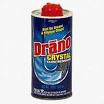
Believe it or not, when you use products containing Propylene Glycol, Ethylene Glycol or Sodium Hydroxide (the primary ingredients of most antifreeze and drain cleaners) this is what you are using.
These chemicals are among the top offenders from the harmful ingredients list because they are found in so many lotions, hair products, cleansers, cosmetics and even toothpaste.
Every day, we use soaps and body washes, creams, lotions, makeup and other items, even one on top of the other, to make ourselves look prettier (or more handsome), younger, erase blemishes, smell better, feel sexier and to attract, or keep, the perfect partner.
Don't get me wrong, looking well-groomed and attractive is important. It’s good for your self esteem as well as your popularity. Though you need to be aware that not all the ingredients in the things you use are good for your health.
How to Read the Personal Care Product Labels
They Can Be Confusing!!
Many cosmetic and personal care companies use labeling and images that mislead a consumer to think their products are organic-based or natural and healthy. But...buyer beware! Their ingredients may very well be deadly!
One good example is of Nature's Gate Organics Lemon Camomile Verbena body lotion. Certainly sounds healthy right? They even made the packaging green to reinforce that it is organic. Well I checked the Environmental Working Group's "Skin Deep" Cosmetic Safety Database (BTW a really great resource to check your products on to see how hazardous they are) and found that it was an 7 on a scale of 1-10.
Sure using herbal words like chamomile and lemon verbena make it sound healthy (like a good cup of tea) but that's not all they put in it. It's really just great marketing making it sound so good for you.
- If you want to take a look at how the rest of the Nature's Gate Organics products fared, then click on the link below to see a spreadsheet of several dozen of them.
Teens Are Especially at Risk
That statement sounds incredibly strange doesn't it? Why teens and not babies should be more aware of this harmful ingredients list? Part of the reason is that teenagers tend to use more cosmetics containing items from this harmful ingredients list than babies and the other part has to do with puberty.
Environmental Working Group (September 2008) detected 16 chemicals from 4 chemical families - phthalates, triclosan, parabens, and musks - in blood and urine samples from 20 teen girls aged 14-19.
What makes that so serious is that studies link these chemicals to potential health effects including cancer and hormone disruption.
These tests feature the first exposure data for parabens in teens. They show that young women are widely exposed to these common cosmetic preservatives, with 2 parabens (methylparaben and propylparaben) detected in every single girl tested. That may not seem like a big deal but really it is HUGE.
So basically every teen girl out there has been exposed to this form of preservative and it is floating around in her blood stream. Yeah, not something any mom wants for their child especially when they are going through the last true growth spurt of their adult lives.
How Do I Find Safe Products?
I asked myself the exact same question. The best way to know is to make your own cosmetics, but if you don't have the time or the desire here a good way to start.
You can do the research yourself, searching for companies that produce natural and organic cosmetics, skin and body care products. But don't stop at what the front of the label says. Check the ingredients to make sure they’re safe and healthy.
After the ingredients pass the test, try to investigate the company.
- What is their mission?
- What are they committed to?
- Do they also produce product lines that contain synthetic ingredients and chemical preservatives? Or are they committed to using only the purest and safest ingredients (not on this harmful ingredients list) in all their products?
- Are they careful about the quality of ingredients they receive from their suppliers?
If that's more than you have time for (it is for most of us), there are a few great resources out there that make it easy to buy healthy products.
Here are two books that made my life (and shopping) much easier:
If you don't have the kind of time that it takes for this, I am in the process of creating a healthy products list containing all of the items that I've found and would recommend to you. If you would like a copy of this list then sign up for my newsletter below and I will send it to you.
Harmful Ingredients List (Part 2)
This harmful ingredients list is not exhaustive and these ingredients may be found in numerous other personal care products than those listed on this page. Be sure to check your labels carefully!
- Acrylate
- acid orange 3
- Acrylate copolymers
- amorphous silicates
- Benzyl acetate
- blue 1,2,4
- bromonitrodioxane
- bronopol
- bronopol (2-bromo-2-nitropropane-1, 3-diol)
- butyl benzylphthalate
- Butylated hydroxyanisole
- butylated hydroxytoluene
- Ceteareth-3
- chlorhexidine
- Choleth-24
- chrystalline silica
- coal tar dyes
- DEA
- DEA-Cocamide & Lauramide & Oleamide
condensates
- DEA-cocamide/lauramide condensates
- DEA-MEA/Acetame
- DEA-Sodium lauryl sulfate
- diaminoanisole
- diaminophenol
- diaminotoluene
- diazolidinyl urea
- Diethanolamide-cocamide, lauramide & oleamide condensates
- dioctyl adipate
- disperse blue 1
- disperse yellow 3
- DMDM-Hydantoin
- ethoxylated alcohols
- ethyl alcohol
- fluoride
- formaldehyde
- glutaral
- green 1,2,3
- hydroquinone
- Imidazolidinyl urea
- lanolin
- Laureth's
- Methacrylate copolymers
- Metheneamine
- methylene chloride
- Morpholine
- nitrophenylenediamine
- Nonoxynol
- Oleth's
- Padimate-O (octyldimethyl para-amino benzoic acid)
- PEG's (polyethylene glycols)
- polyoxymethyleneurea
- Polysorbate 60
- Polysorbate 80
- polyvinyl acetate
- polyvinyl pyrrolidone
- p-phenylphenylenediamine
- pyrocatechol
- Pyroglutamic Acid
- Quaternium-15
- quaternium-26
- red 4,9,17,19,22,33,40
- saccharin
- Sodium/Hydroxynethylglycinate
- talc
- TEA
- vTEA-Sodium lauryl sulfate
- titanium dioxide
- Yellow 5,6,8
Return from Harmful Ingredients List to Nontoxic Alternatives